CATEE
CAT3DX – CATIA на 3DEXPERIENCE
FPE — создание готовых изделий

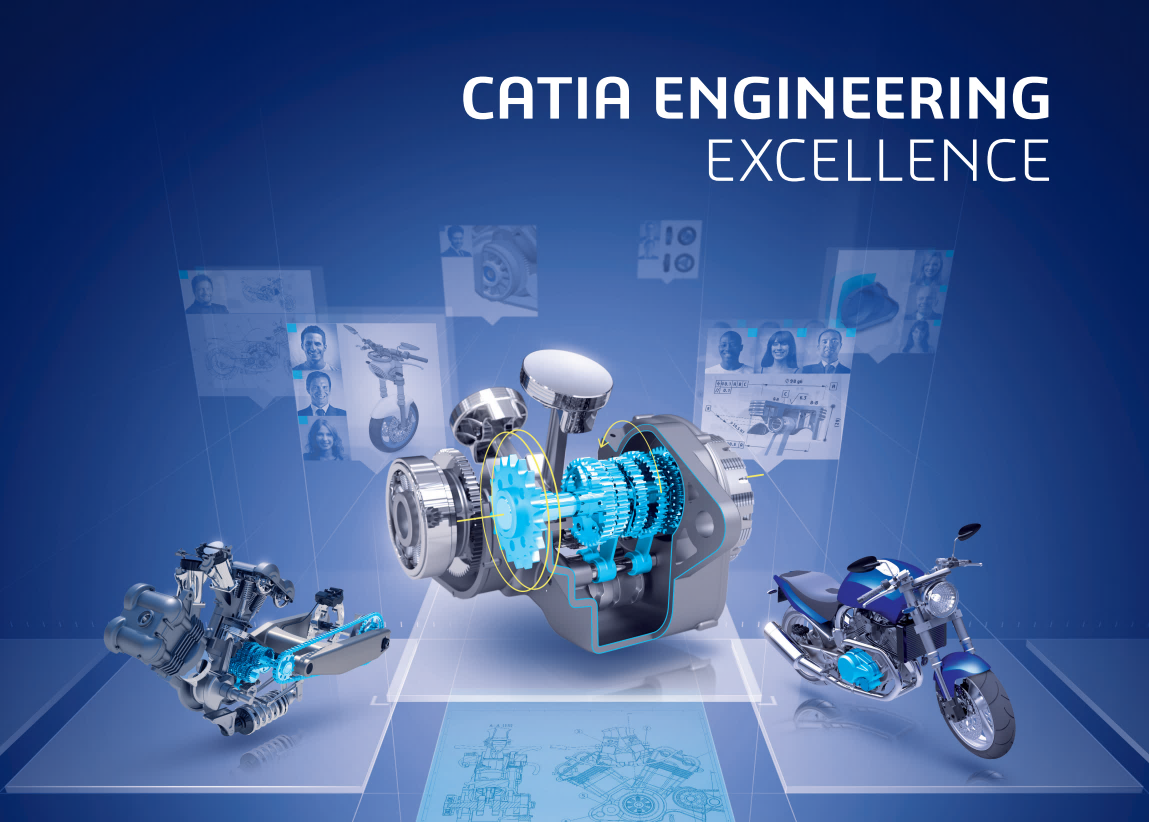
When effective collaboration meets world-class engineering, it's a winning combination that extends the capabilities of the existing CATIA user experience all the way to production. Take advantage of an expanded set of applications for creating and managing complex mechanical projects, including part design, sheet metal, tooling, assembly design, functional tolerances and annotations, kinematics and fittings simulation, DMU viewing, advanced surface design, and more. This offering combines a large set of CATIA V5 applications with the 3DEXPERIENCE® platform, providing extensive collaboration capabilities alongside powerful CAD management capabilities. CATIA Engineering Excellence includes three packages to help you get started with 3DEXPERIENCE CATIA.
FPE — создание готовых изделий
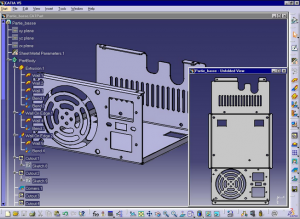
Finding ways to shorten cycles from design to production is a key priority for industrial companies. Companies need to quickly design standard sheet metal parts in 3D that are not only complex but also ready for production.
The CATIA Fabricated Product Creation option is designed for rapid sheet metal part design. Designers benefit from pre-implemented know-how and can take manufacturing constraints into account early in the design process. This enables them to create sheet metal parts that fully comply with company rules and standards for efficient manufacturing.
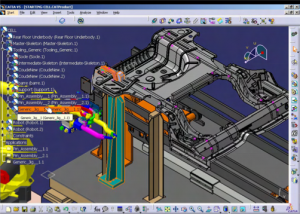
Modern manufacturing requires companies to reduce product development time and capitalize on their know-how so they can respond quickly to customer needs. To make this happen, they must expand their capacity for innovation by automating redundant tasks and focusing on innovative projects.
CATIA JTE quickly and easily creates all tool elements, including designs (linear or curved), plates using standard or user-defined cross-sections, and common and custom tool components. With a wide variety of standard and user-defined components with built-in drilling and manufacturing information, engineers can design faster than ever and focus on additional tasks. Fully integrated into the CATIA environment, designers can, for example, seamlessly perform extensive stress analysis on their structural elements and beams, create drawings, or generate all the information needed for CNC programming.
The increasing complexity of product development has made it impossible to innovate using 2D design alone. Most engineers find it convenient to generate ideas using 2D drawings, but the transition from 2D to 3D design is often chaotic and time-consuming. Companies need to convert their 2D drawings to 3D as easily and quickly as possible.
CATIA — 3D Layout & Annotations meets the needs of customers who want a smooth transition from 2D to 3D and promotes innovation through a unique 2D/3D approach to conceptual design. What’s more, it reduces dependence on 2D drawings by storing all drawing information, 3D tolerance specifications, and annotations within the 3D model, and increases the widespread use of 3D images as the primary representation within and across the enterprise.
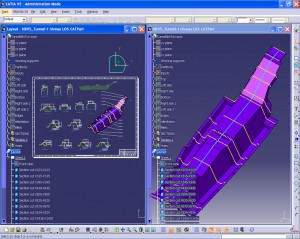
Global demand and disruptive technologies are complicating the product designs and supply chains required to create them. These distributed organizations need a way for stakeholders to view, understand, and evaluate the definition of a virtual product.
CATIA — Technology Review enables the 3D product definition to become the basis for human interaction and communication. It provides access to critical product information, including functional annotations and tolerances, fastener types and locations, and finite element analysis results. It also gives companies the ability to filter confidential information before sharing 3D designs with partners.
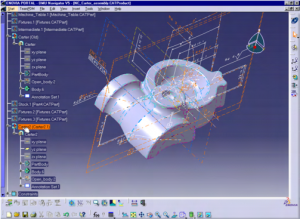
Finding ways to shorten cycles from design to production is a key priority for industrial companies. Accurate virtual definition of mechanical products is the answer, but sometimes it takes a long time to create and design changes are difficult. Companies need a high-performance, flexible solution without compromising design accuracy.
CATIA — Mechanical Product Creation is the most comprehensive and reliable solution designed for any company that wants to change the situation for the better by quickly developing high-quality mechanical products with maximum productivity when making design changes.
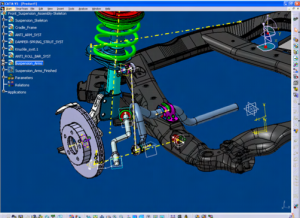
Companies that use 2D drawings to enter tolerances and annotations must maintain synchronization between 2D drawings and 3D modifications in order to share consistent and up-to-date manufacturing information. This process is time-consuming and error-prone, and prevents the use of 3D tolerance analysis or metrology.
CATIA — 3D Master provides 3D definition and management of standard tolerance specifications and annotations for parts and products. It converts 3D into a master view that can be directly reused for production planners and distributed throughout the enterprise.
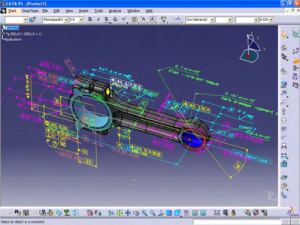
Manufacturers must overcome unique technical and strategic challenges to keep pace with today’s virtual global marketplace. As global demand and advanced technologies complicate product design, engineers need more sophisticated desktop tools to quickly validate and launch projects into production.
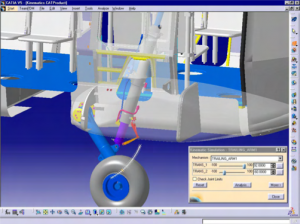
CATIA — Animated Product Review provides a complete set of tools for simulating complex product behavior in a single, unified environment. This allows more decisions to be made during the virtual development phase before investing in costly prototypes, manufacturing resources, and product launch activities.
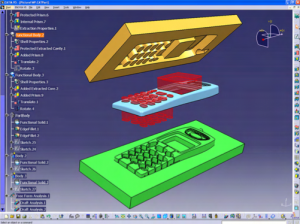
The process of designing and creating molded parts is often time-consuming and inflexible, which is incompatible with accelerating market trends for new designs. Companies must be equipped with the most advanced and high-performance technologies to remain competitive.
Molded Product Engineering provides ultra-fast functional modeling for unmatched performance and flexibility, allowing you to consider the entire molded part preparation process from design to production.
Companies need simple and ergonomic tools to quickly transform shapes without compromising quality at any stage of the design process.
CATIA Mechanical Shape Optimization includes unique, revolutionary technologies that enable rapid global transformation of complex shapes. This allows you to either interactively deform shapes or capture realistic shapes based on real-world product testing. This easy-to-use environment helps designers achieve real productivity gains by optimizing the product or defining the tool.
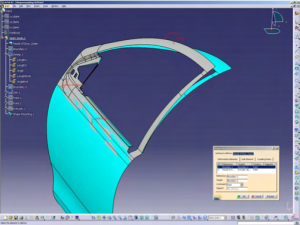
In traditional systems, the design process is complicated and makes it very difficult to modify designs. The lack of collaboration between designers leads to an increase in the number of iterations and product development time. Companies must recognize that aesthetically appealing products are not always feasible to manufacture.
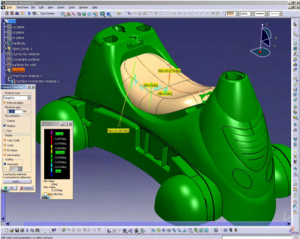
CATIA — Freestyle Shape Design is used to design stylized shapes thanks to powerful technology that allows conceptual shapes to be transformed into high-quality stylized shapes that are then ready for use in A-classes or manufacturing processes.