Menu

Winning program

70% of cost decisions made during the program concept development and preliminary design phase impact 80% of the total lifecycle cost.

Roland Berger 2011

To respond to the client’s RFP, creating the right concept requires comprehensive management of defining alternatives for a complex system. Companies that focus on this setup phase before launch improve the credibility of proposals and the accuracy of delivery. The Winning Program enhances program definition and helps make better decisions between options and costs.

The best proposal is based on high accuracy of the system concept, detailed alternative definitions, and comparisons with a fully traceable modeling history and relevant data. As a result, the delivered proposals are technically feasible, timely, and competitively priced to fully meet client requirements.

KEY BENEFITS

  • End-to-end knowledge gathering ensures complete transparency and reuse of processes.
  • Creates the best conceptual architecture with full traceability of decisions at the concept stage.
  • Accelerated conceptual research using iterative optimization for collaborative decision-making.
  • Timely access to data through secure storage, searching, and retrieval.
  • Improved quality of alternatives with dedicated single and network simulation engines.

Proposal Development

Describe the complexity and nature of the concept

Proposal Development provides management and collaboration tools for effective documentation and management of information about programs and projects for Requests for Proposals (RFP) or Preliminary Design Reviews (PDR).

  • A management environment to ensure effective convergence with proposal outcomes (integrated master plan and integrated master schedule)
  • Integrated visibility of requirements and traceability to ensure compliance and fulfillment of requirements throughout the concept development phase.
  • Measure program performance, schedule, and cost with greater clarity
  • Eliminate program information silos and achieve a single version of the truth

Configuration Development

Turn requirements into alternative solutions

Configuration Definition uses a more precise approach to compare complex A&D systems. It provides tools for understanding the correlation between requirements and the selection of system components, and for sharing a unified view of the system architecture with an extended group.

  • Gather design knowledge to empower designers to explore more “what if” scenarios and retain valuable knowledge within the company.
  • A more accurate definition of complex systems to significantly reduce the overall program cost.
  • Simplify the assessment and compensation of the impact of various disciplines to achieve the best architecture and concept definition to meet requirements.

System Trading Research

Explore the “best” alternative design

System trading research provides enhanced opportunities to view trade-offs through interdisciplinary analysis and an optimization process that delivers analytical results to validate system choices.
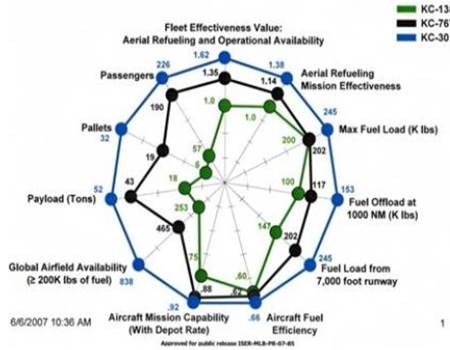

  • Confidence in the concept increases, and program costs decrease with the number of trading studies.
  • Concept fidelity is higher (faster, more detailed, more alternatives)
  • Preliminary/detailed design phases and overall program costs are lower. Capture and reuse the entire history of analysis (model, scenario, result) for use in future studies.
