The engineering group European Spallation Source (ESS) adopted the 3DEXPERIENCE platform to ensure integrated design and data management, as well as to optimize collaboration.
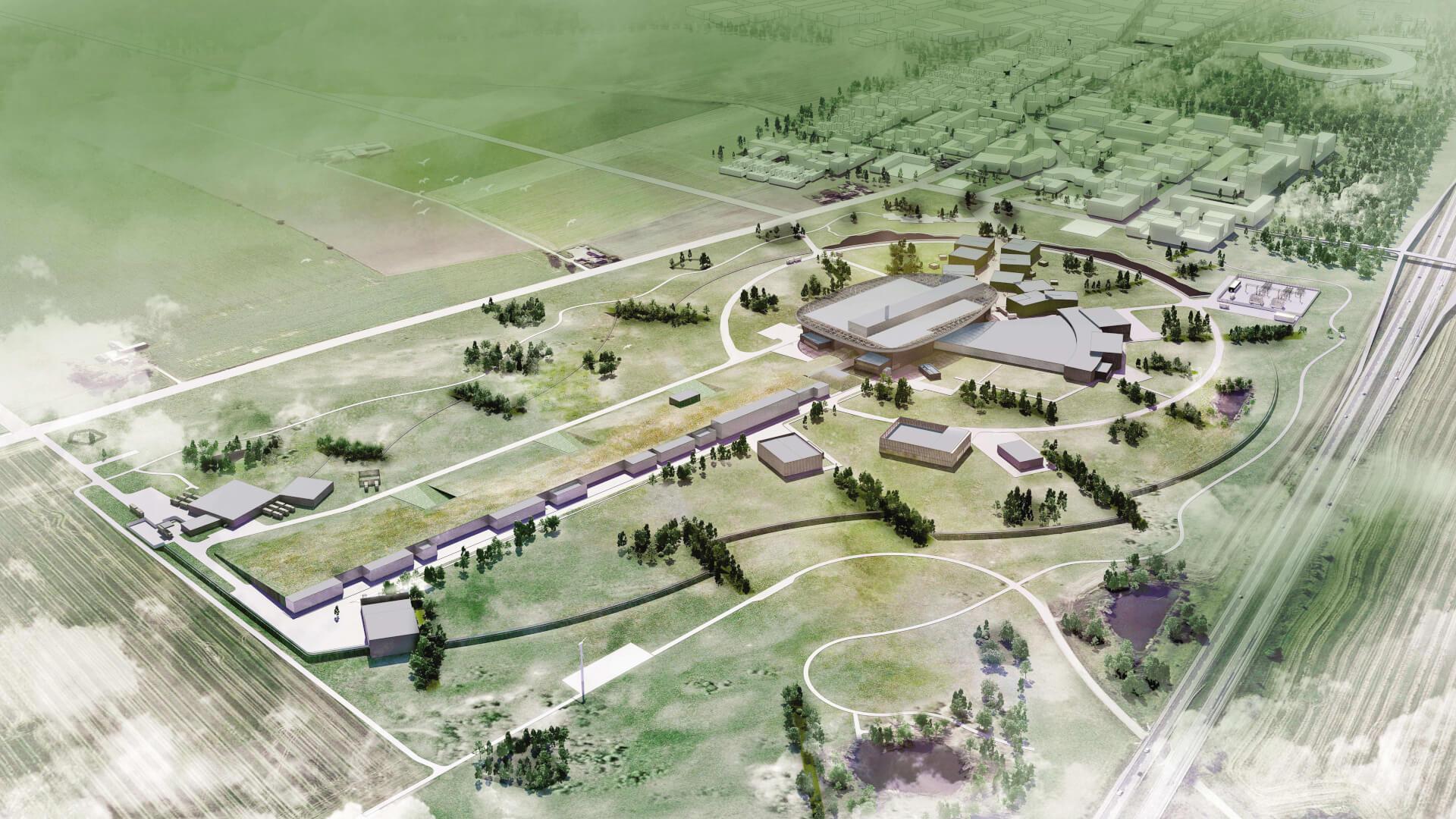
Scientific research based on neutrons can shed light on some of the greatest mysteries of the world by analyzing the structure and dynamics of materials in ways that are inaccessible to other research methods. In fields such as energy, health, materials, and the environment, scientists will utilize the interdisciplinary research center European Spallation Source (ESS), based on the world’s most powerful neutron source, to see and understand atomic structures and forces. ESS is being developed by scientists for scientists and is expected to attract up to 3,000 researchers each year. What makes neutrons so interesting? “Neutrons have no electric charge; they are fantastic probes for studying atoms and molecules without damaging them,” said Roland Garoby, technical director of ESS. “For example,
“Scientists can use neutrons to study materials at the molecular or even atomic scale and see things that cannot be seen using other methods, such as X-rays or MRI,” Garoby explained. “Although there are other facilities in the world with neutron sources, ESS will feature the most powerful proton accelerator ever built, which will generate more neutrons that will be converted into science-useful neutrons using much more efficient moderators. As a result, the neutron beams at the instruments will be 100 times brighter than anywhere else today. These advancements will allow scientists to explore material structures more quickly and accurately at scales that are inaccessible to other neutron sources.”
ESS consists of 23 buildings, all currently at different stages of construction. The facility will house equipment delivered as in-kind contributions from member countries as part of technical and scientific cooperation among European laboratories, universities, and research institutes for the design, development, and production of major parts of the accelerator, target (a stainless steel disk containing bricks of neutron-rich heavy metal tungsten), instruments, research laboratories, software, control systems, and other systems. Due to the complexity, the ESS team must coordinate their work and integrate their projects into the overall layout of the facility before releasing them to the construction site. To this end, ESS manages information through enterprise reference information, which helps ensure safe collaboration and effective management of the facility’s destructive structures.
When it comes to configuration management and consolidation, a common platform is necessary as it provides a holistic view of the object.
“ESS started as a project from scratch,” said Peter Rodahl, head of engineering and integration support at ESS. “Initially, we began designing objects using Dassault Systèmes’ CATIA design solution, as this solution was most commonly used by all partners involved in the project. At an early stage of the ESS project, Dassault Systèmes released the 3DEXPERIENCE® platform, which provided a significant advantage: it allowed us to coordinate the design and construction of these objects as a whole, consisting of millions of parts, enabling us to integrate each partner’s 3D designs into a single 3D master model. This includes everything from structural components and equipment to the smallest parts. Uniquely, all our data is stored on one platform,” Rodahl said. “Regardless of the design software used, whether CATIA or third-party,
“When it comes to configuration management and consolidation, a common platform is necessary as it provides a holistic view of the object,” he continued. “Our staff consolidates all their information within the platform, resulting in the status being up to date. For example, 3D models are uploaded to the platform weekly, allowing us to identify all conflicts and discrepancies in the projects in CATIA. With this level of control, we can correct the design before moving forward.”
TECHNIA played a vital role in the timely and successful implementation of the 3DEXPERIENCE platform. “When we were implementing Dassault Systèmes solutions, TECHNIA was responsible for coordinating our three-way partnership,” Rodahl said. “We hold annual meetings to inform Dassault Systèmes about our experiences with the platform, and Dassault Systèmes informs us of planned developments. For example, if we are doing something on the platform that is not quite ready, we try to ensure that we align with the development plan. And if we have developed something that is not on the platform, we are ready to provide Dassault Systèmes with the benefits of our work. Our collaboration is mutually beneficial for all partners.”
“TECHNIA supports us with all software updates and helps us ensure that the installation works correctly,” Rodahl explained. “A total of 80 people have been trained in CATIA, and their biggest challenge was getting used to new methodologies and maximizing the benefits of collaboration provided by the platform approach,” he said. “It will take some effort to transition from a fragmented way of working on a computer to a coordinated approach where multiple people work on the same model.”
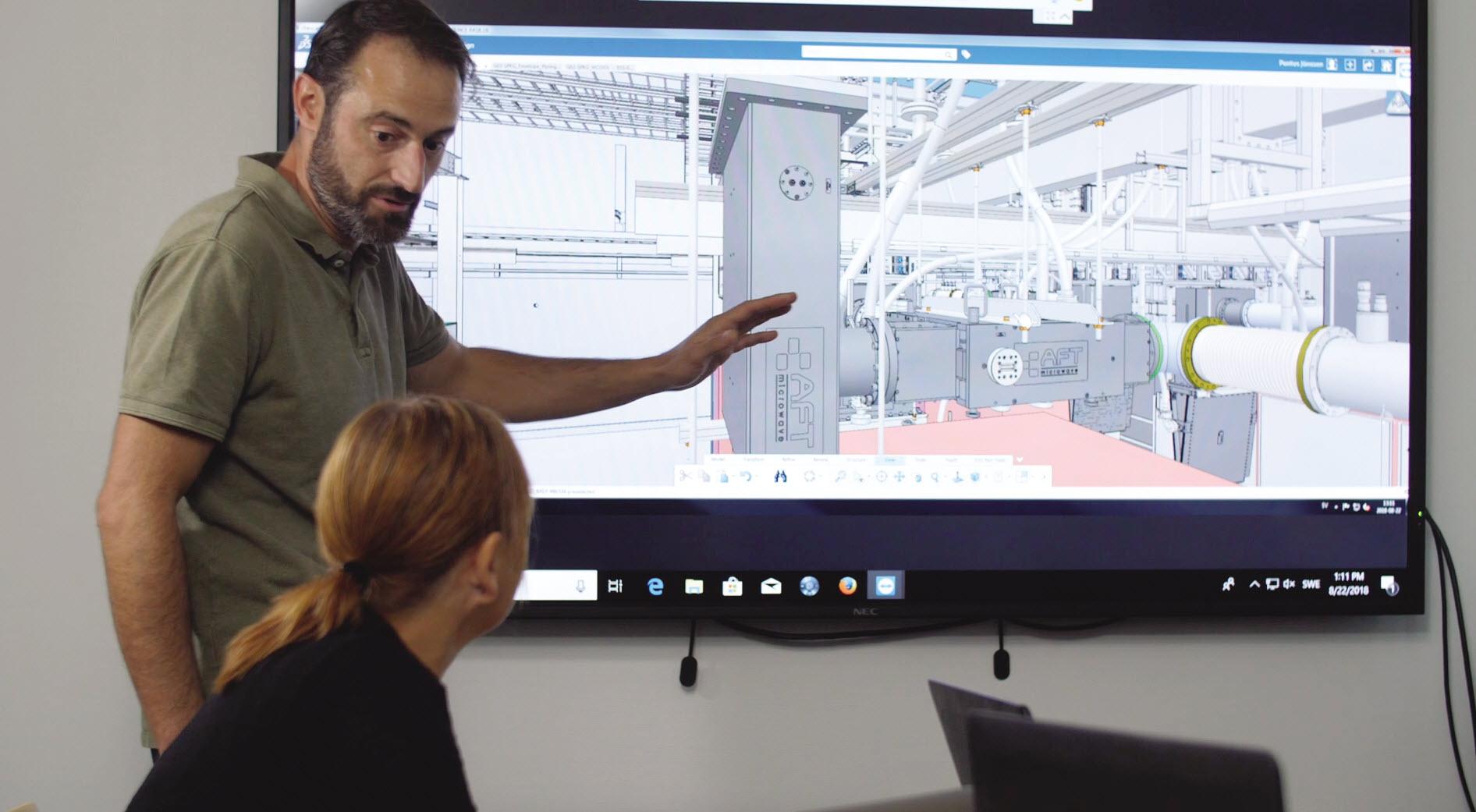
Rodahl and his team communicate with construction crews on-site through the 3DEXPERIENCE platform. “Builders connect to the platform to access all models. If there are any changes in the design, they are informed about it because modifications are consolidated on the platform before we deliver the revised model to the field,” he said. “Everyone agrees that the benefits of working with a single source of reliable information outweigh the concerns of some engineers about changes in their working methods. Now everyone uses it because they recognize the correctness of our decision to switch to the 3DEXPERIENCE platform. ‘ESS has gained tangible benefits from the 3DEXPERIENCE platform. The ability to make decisions early in the development process, as well as the fact that requirements and project geometry are interconnected, means we don’t have to think about where to place things — it’s already in the platform from the very beginning,” Rodahl said. “This will help save time in creating documentation.
“Working on the master model has also led to safer construction and maintenance processes, as designs and tasks can be virtually modeled before workers attempt to build or repair a part of the facility. ‘The installation sequence is virtually planned on the 3DEXPERIENCE platform before this procedure is launched in real conditions. Projects have also been reviewed by local stakeholders using the digital master model to provide them with a preview of the finished facility and how it fits into the environment,” Rodahl said.
“As numerous partner institutions in member countries across Europe work simultaneously, using a unified platform like 3DEXPERIENCE meets our requirements for concurrent engineering,” said Rodal. Moreover, suppliers, many of whom also use CATIA, are an integral part of the design and creation efforts for ESS. “We have two different setups,” said Rodal. “Most of our partners work with this platform, but if a supplier uses the latest version of CATIA, they can connect to the 3DEXPERIENCE platform and work on concurrent engineering alongside us. Otherwise, they upload their projects to our system, and we place them in the master model ourselves.”
“Since ESS is being designed and built in collaboration with many different stakeholders across Europe, we must ensure that everyone has the correct data with the right versions and that there are no discrepancies in the design process,” said Henrik Lindblad, head of the PLM group and process support in ESS. “We incorporate all this data into our 3D master model, and we can refer to this common model during our regular coordination meetings, both internally and with our partners, to ensure that everyone is aligned. This allows us to make quick and correct decisions on issues such as integration and changing requirements. One area that is particularly important to us is the ability to detect any conflicts during installation very early and resolve them before we actually start installing components on-site.”
We incorporate all data into our 3D master model to ensure that everything is aligned. This allows us to make quick and accurate decisions on issues such as integration and changes in requirements.
Most of the equipment in ESS is complex and involves multiple disciplines, such as electrical, mechanical, and software. To ensure they operate correctly, Rodahl and his team use CATIA with Dymola for virtual modeling of operations before physical assembly. All teams utilize the workflow and document management capabilities of the ENOVIA application to optimize collaboration and keep the project on schedule. “We use automated notifications and subscriptions to ensure smooth operations, as well as document management for version control and changes,” said Rodahl. “Additionally, certification bodies can access all our documentation on the platform for compliance purposes.”
ESS also uses 3DEXPERIENCE ENOVIA to track specifications and requirements throughout the design process. “Designing the building and surrounding systems is likely the most complex integration we do here at ESS,” said Lindblad. “We use ENOVIA requirements management to ensure, for example, that the design meets the requirements. Currently, we are exploring the possibility of using DELMIA for modeling and defining the installation sequence, which will allow us to provide field workers with work instructions that have been pre-tested digitally. Our tests are going well, and I really hope this will be implemented in the near future.” “Once the project is completed, there will be ongoing efforts for modernization and facility management in the future,” added Rodahl. “By using our data on the platform,
The European fusion source has a bright future filled with exciting scientific discoveries. Tracking its history from inception to construction using the 3DEXPERIENCE platform will help ensure its sustainability for future generations. “ESS is a great example of what European states can achieve together: combining their knowledge and skills to create a state-of-the-art facility that will lead research for quite some time,” concluded Garobi.
A multidisciplinary research facility based on the world’s most powerful neutron source. Information and entertainment systems, as well as freely programmable instrumental systems, used on a global scale.
Construction budget: 1843 million euros.
Partnership and collaboration: 13 member countries, over 40 partners in kind, more than 100 international organizations.
Headquarters: Lund, Sweden.
For more information: https://europeanspallationsource.se/
At TECHNIA, we pave the way for your innovations, creativity, and profitability. We combine industry-leading product lifecycle management tools with specialized knowledge so you can enjoy the journey from product concept to realization. Our expertise allows us to make things simple, personalized, and accessible, so together we can turn your vision into value. With over 30 years of experience, more than 6000 clients worldwide, and world-class knowledge in PLM and intelligent design, we work together as a true partner and extension of your team to create an exceptional PLM experience. Our strong team of 650 people operates in 27 locations around the globe, across various industries, providing premium services with global infrastructure and local presence. We implement the latest technologies and flexible methodologies, so, https://europeanspallationsource.se/

