Menu

Transportation modeling solutions

TRANSPORT

The transportation industry is undergoing a revolution: customers want new and personalized experiences. New companies and competitors are emerging and growing rapidly. Electric, connected, and autonomous vehicles are entering the market, and many more are in the planning stages. Global regulations on energy consumption, safety, and environmental performance are becoming more stringent. The complexity is increasing. The challenge of reducing costs is more acute than ever.

How can companies successfully compete with others? Digital design is at the heart of the strategy to address these challenges, including virtual testing and simulation in all aspects of vehicle concept, design, manufacturing, and operation. For market veterans and innovators alike, an industry-wide approach is important, where multi-level and cross-industry modeling enables development, innovation, and optimization for rapid product launch. This predicts costs, reduces risks, and creates an attractive product that customers want to buy.

Development of the control and measurement industry

WLTP

  • The Worldwide Harmonized Light Vehicle Test Procedure (WLTP) not only defines methods for assessing vehicle emissions and fuel consumption, but also establishes how to report the expected performance of electric vehicles. With SIMULIA's simulation solution, OEMs and suppliers can optimize vehicle and component designs to meet stricter emission limits. Physical testing in WLTP can be replaced by virtual testing, and SIMULIA allows you to configure the WLTP compliance mode and regulatory requirements.

Electric vehicles

  • The pace of electrification is accelerating, but at the same time, the challenges that need to be addressed are becoming more complex. To succeed in the field of electric vehicles, both existing automakers and new entrants need knowledge and experience in modeling. In addition, a unified approach to the development and testing of complex interconnected systems (from batteries to electric drives) must be implemented, and the design features and controllability of the vehicle must be taken into account.

impact resistance

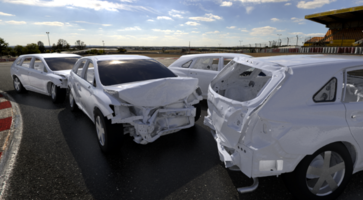
  • Over the past decade, crash test regulations have become much stricter, and good safety ratings require good performance ratings. To continue receiving five-star ratings, OEMs need to improve their research in the areas of design, materials, and passive safety systems, and this is where impact simulation plays an important role.

Vehicle dynamics

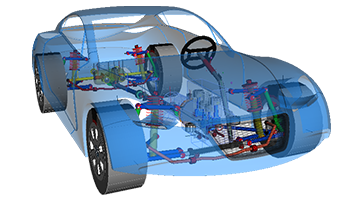
  • Develop, optimize, and validate typical dynamic characteristics, including handling, maneuverability, and ride comfort, using multi-body simulation in standalone mode and in real time. It also includes advanced multi-body simulation workflows for strength assessment, noise and vibration investigation at the component and system levels, and verification of overall mechatronic system capabilities.

Interior comfort

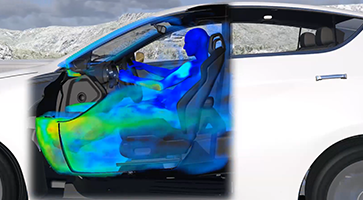
  • Solve a variety of design challenges with a digital simulation platform that selects comfortable temperatures, acoustic, visual, and ergonomic comfort for drivers and passengers. Provide customers with comprehensive interior personalization and energy management capabilities.

Electric drive development

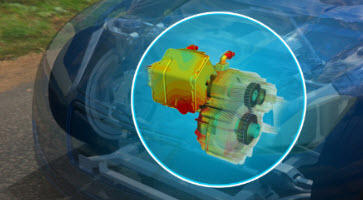
  • Multiphysics simulation enables engineers to predict and verify system performance against various design goals across all possible operating scenarios. Finding a compromise between conflicting requirements such as electromagnetic compatibility, durability, noise and vibration control, and lubrication requirements is a challenging task and is best tackled collectively.

Performance-driven architecture

  • The Performance Driven Architecture industry process provides early project assessment across disciplines in a unified environment that supports requirements entry, architecture definition, system modeling, and virtual simulation. Architects and modelers communicate more effectively with each other to virtually evaluate their ideas and explore the pros and cons at the concept level before moving on to detailed design.

Chassis and suspension strength, durability, and vibration

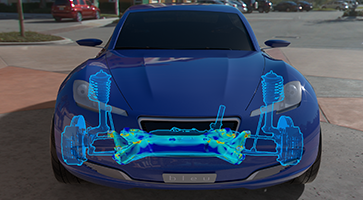
  • The main objectives of the "Chassis and Suspension Strength, Durability, and Vibration" solution are: 1) to ensure the structural integrity of the chassis and suspension to support the body; 2) to improve handling and ride quality; 3) to ensure compliance with regulatory and quality requirements.

Powertrain Strength, Durability & Vibration

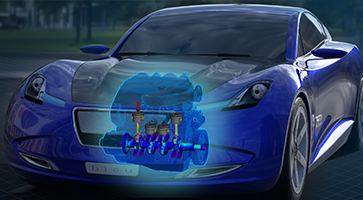
  • Powertrain Strength, Durability & Vibration is a solution that combines all processes of high-precision structural modeling of internal combustion engines, which is suitable even for very large models. It is an important part of the process of developing and optimizing powertrains for passenger cars, trucks, and other vehicles by virtually verifying structural characteristics using Abaqus finite element analysis (FEM) technology.

Brake system development

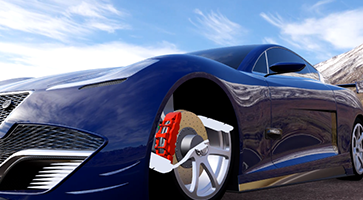
  • Simulation reproduces the physical three-dimensional effects of stress, heat, and fluid flow when interacting with other vehicle systems, including controls and suspension. Simulation using high-accuracy physics and fast processing methods allows engineers to quickly evaluate large sets of designs and improve designs. Design verification work can be performed at both the vehicle level and the subsystem level.