AKKA Technologies needed an innovative solution to enable collaboration among all its multidisciplinary and multifunctional departments.

Modern cars are equipped with technologies that make driving easier: sensors that keep the car at a safe distance from other vehicles, functions that alert us when we change lanes without signaling, reminding us that we might just doze off, and onboard sensors that detect an impending accident. More and more cars are not just transporting us from point A to point B; they aim to get us there safely. They are more sensitive and better aware of what is happening around them, helping to prevent accidents and possibly ultimately saving lives. As technology matures, cars are becoming smarter.
However, these technologies are limited to the car itself, and in a connected world, consumers demand a more communicative and open approach to mobility. Vehicles need to connect to other technologies to receive and transmit information that can change the car’s behavior based on the data received. “The era of smart and connected cars has arrived,” said Philippe Aubry, Chief Innovation Officer at AKKA Technologies.
Leading companies like AKKA Technologies — an international engineering and technology consulting group — and its innovation center AKKA Research have made innovation their motto. “We assist our clients with their industrial projects, but we also leverage our expertise in engineering and digital technologies to develop our own advanced projects that can benefit industry or society as a whole.”
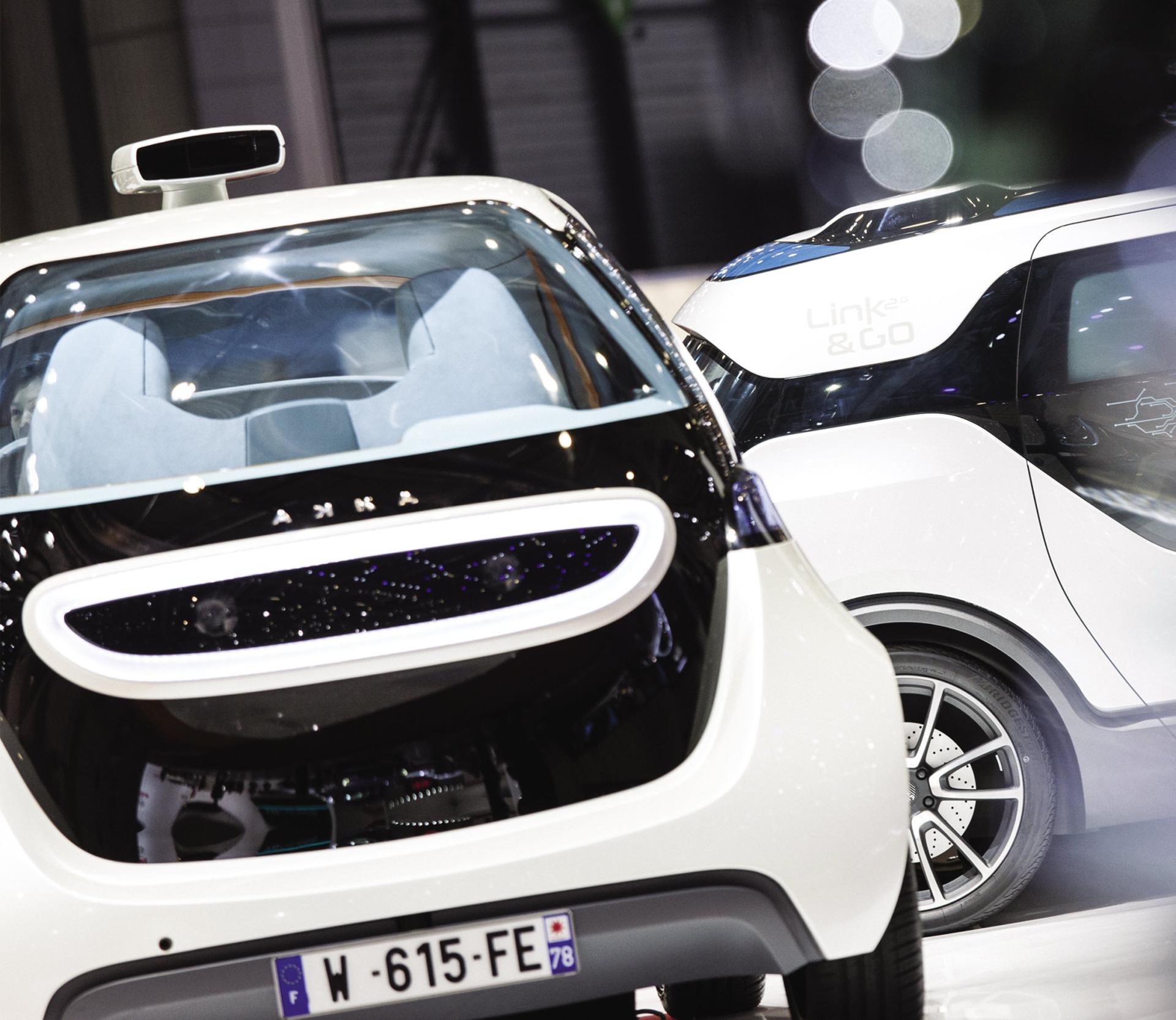
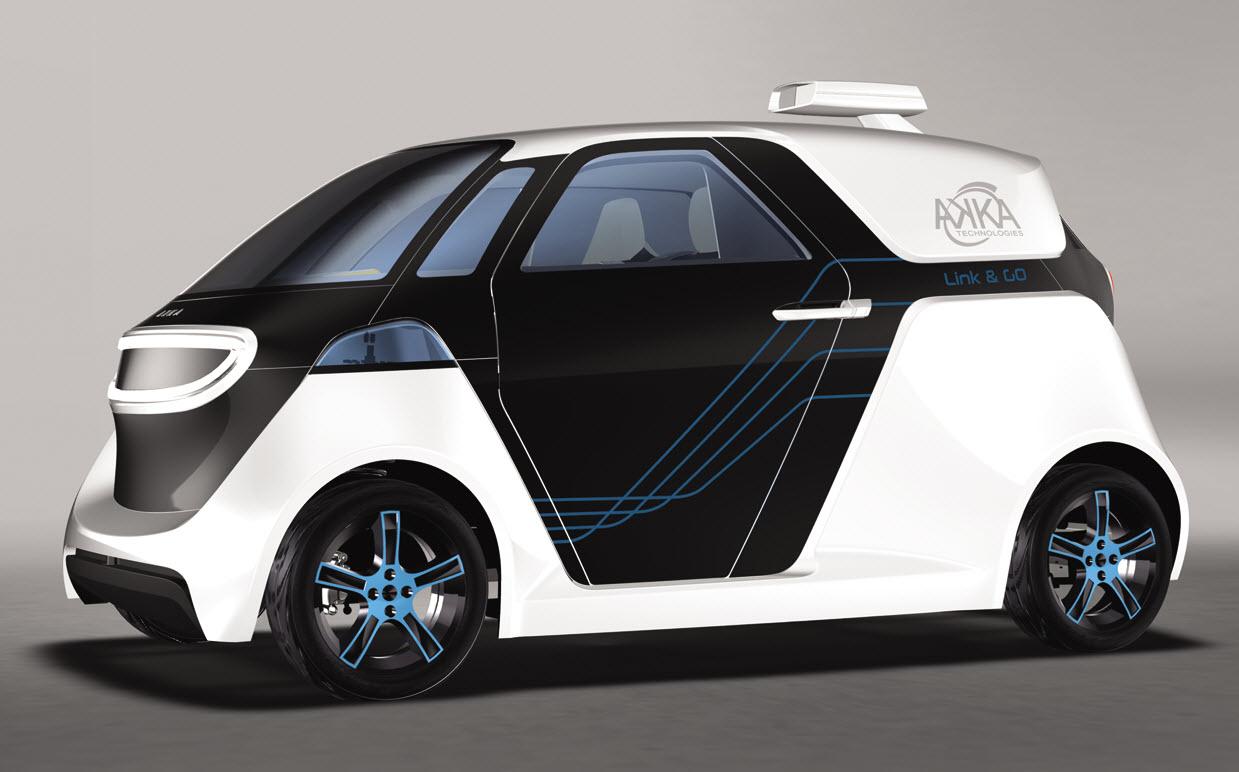
One of these innovative projects is the concept car Link & Go and its successor Link & Go 2.0, an autonomous electric vehicle filled with innovations that may interest automakers in their future cars. “Link & Go 2.0 represents our vision of a field that has recently received a lot of attention: autonomous vehicles. This project is a pioneer for AKKA Research because we believe that the best way to predict the future is to invent it,” said Aubry.
For AKKA Research, the car of the future is a connected, fully electric autonomous vehicle that can interact with smart infrastructures—traffic lights, signs, toll booths, roads—and smartphone applications. This evolution will change the perception of mobility in our future cities. Link & Go 2.0 goes beyond the car itself and demonstrates how a connected vehicle can fit into the future of urban transport as a whole. “An autonomous electric vehicle is part of the mobility infrastructure that includes other cars, public transport, cyclists, and pedestrians, and is coordinated through complex sensors and cloud-based applications. All of them function in harmony to transport people from point A to point B safely, with minimal costs and the smallest possible carbon footprint. And, of course, the experience should be simple, smooth, and convenient,” said Aubry. “Link & Go 2.0 combines technologies and ideas used in the automotive, aerospace, and railway industries. This autonomous vehicle also provides conveniences for public transport users; there’s no need to worry about parking, carpooling, or favorite pastimes like reading a book, surfing the web, or chatting with friends on the go.”

We cannot solve tomorrow’s problems with today’s solutions, but we can certainly succeed with innovative solutions.
The AKKA Research teams used innovative technologies from Dassault Systèmes’ 3DEXPERIENCE cloud platform to develop Link & Go 2.0, because “we believe they meet the needs of all stakeholders in the project, regardless of their discipline or location,” said Aubry. In fact, Link & Go 2.0 became a collective achievement of 40 engineers working in AKKA offices in France and Germany. “One of our biggest ‘challenges’ was to ensure that people with different skills and experiences, from different backgrounds, in different locations could work together seamlessly,” said Jérôme Julien, project leader at AKKA Research. “This was made possible by the 3DEXPERIENCE cloud platform. It allows project participants to access all necessary applications whenever they need them. They are no longer dependent on the IT department for application or system administration. By collaboratively using the same data and application environment, we ensure true digital continuity and full compatibility from idea to car assembly.”
“Moreover,” he continued, “all product and project data is in the cloud. We eliminated the headache of searching for information stored on someone else’s computer or lost due to forgetting to back it up. The Dassault Systèmes cloud management team regularly backs up and encrypts our data to ensure complete security. Finally, since everyone has real-time access to the digital 3D model of the car, they can work on it and share ideas as if they were working in the same office,” Julien said. “The cloud has definitely changed our approach to collaboration across multiple sites.”
The 3DEXPERIENCE platform in the cloud was easy to deploy, and the applications for design, modeling, and data management are simple and intuitive. “In less than two days, we were fully operational at all eight sites,” Julien said. “We have a long-term partnership with Dassault Systèmes based on a shared vision held by people with similar values,” Aubry said. “The Dassault Systèmes industry group provides AKKA Technologies with full support for the Link & Go 2.0 project,” Julien added. “Whether it’s deployment or everyday use of the platform, this partnership is not only effective but also a real advantage for the project.”
Smooth deployment was ensured by Dassault Systèmes partner Keonys, who was involved in the project from an early stage. “Keonys has been present from the very beginning, providing us with their expertise to quickly bring us up to speed as the project evolved,” Aubry said. “The AKKA and Keonys teams were in complete harmony. Keonys even helped implement innovative, collaborative PLM methodologies that further simplified coordination between our various sites.”
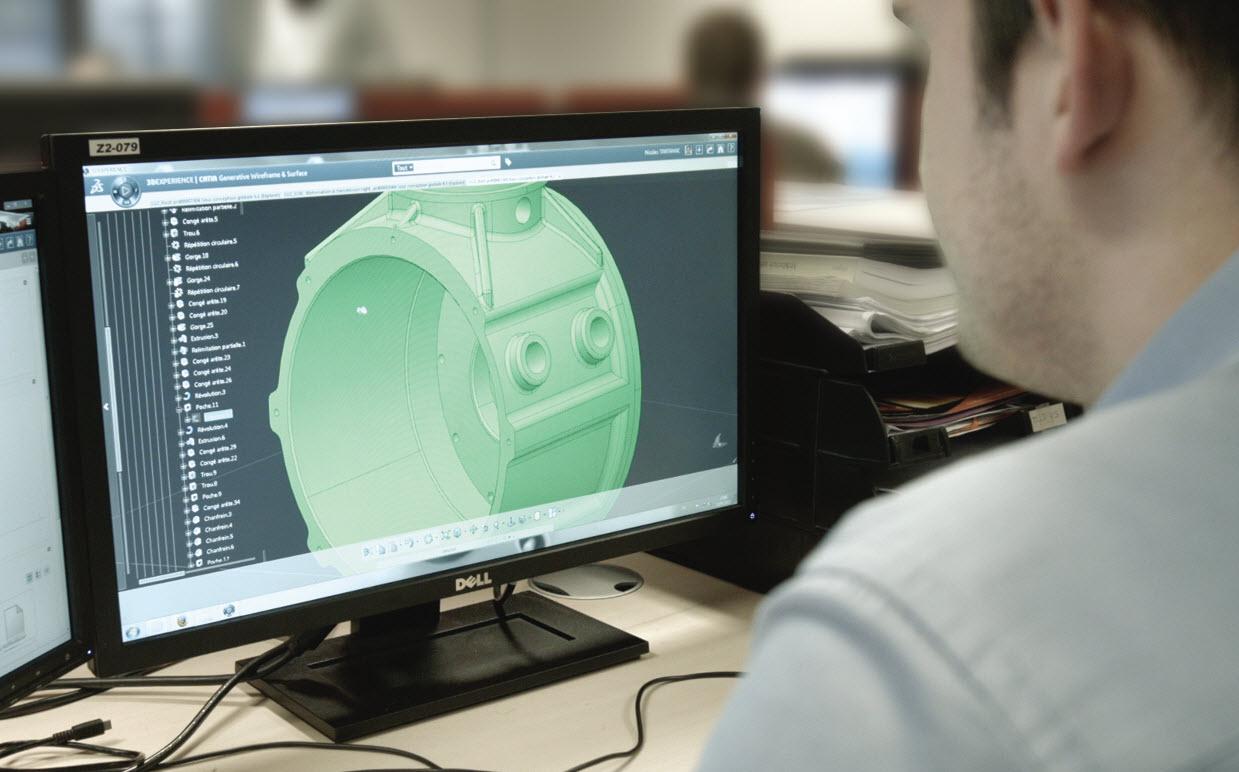
For an international company like AKKA Technologies, remote work with centralized access to the same data helps avoid pitfalls in transferring information back and forth, which can significantly slow down operations and create interception risks. “What really mattered were the communities,” said Julien. “They were extremely popular among our engineers, who could share, view, and benefit from important information about projects and products in a fun and convenient way. This stimulated ideas and innovation. This socially-oriented design approach gave an informal tone to the expression of ideas and providing feedback on others’ ideas. Proposals can be published, discussed, and then saved or not used in the car design.”
Information panels displayed all necessary project information and provided quick and easy access to engineering applications. They also contained information such as project status and milestones, as well as external information sources with RSS feeds. “There is no doubt that communities and information panels strengthen team spirit,” said Julien.
CATIA, the design application of the 3DEXPERIENCE platform, was used for designing and assembling mechanical, electrical, and hydraulic systems, as well as mechatronic systems of the car. “The main challenge with Link & Go 2.0 is its complex mechatronic systems that connect the mechanical and electrical components of the car,” said Anouar Douibi, head of the Drive by Wire work package at AKKA Research. “For example, we used CATIA systems to model the behavior of the drive-by-wire system, electric power steering, before assembling the physical prototype. It became easier and faster to detect and fix errors in the virtual model. In Link & Go 1, with only a physical prototype to work with, we spent weeks testing and making adjustments,” said Douibi.
The Innovators Family Concept Car Link & Go 2.0 from AKKA Research represents a platform for innovative solutions to future urban mobility challenges. By combining engineering expertise with technologies and tools in high-tech, cloud computing, big data, and cognitive intelligence, the intelligent vehicle Link & Go 2.0 accelerates the family business founded by Maurice Ricci over 30 years ago into the future to achieve higher goals: placing consumers at the center of tomorrow’s cities with a combination of mobility services that meet their needs. “We cannot solve tomorrow’s problems with today’s solutions, but we can certainly succeed with innovative solutions,” concluded Aubry.

AKKA Technologies is an international consulting group in engineering and technology, with 11,000 employees across Europe, America, and Asia. The Group has its own research center, AKKA Research, fully dedicated to innovation and forecasting future technologies.
Services: technological and innovative research projects covering various industries such as aerospace, automotive, and rail.
Number of employees: 11,000.
Headquarters: Paris, France.
https://www.akka-technologies.com/
Keonys is a key player providing consulting and integration solutions for Product Lifecycle Management (PLM). For over 20 years, Keonys has been helping industrial clients of all sizes and across all sectors innovate to optimize and accelerate the development of new products and services.
Keonys has been collaborating with AKKA Technologies since the inception of the innovative Link & Go 2.0 project, implementing joint PLM methodologies to integrate various engineering disciplines represented by 40 engineers in different locations on the 3DEXPERIENCE platform by Dassault Systèmes in the cloud.
https://www.keonys.com/

